
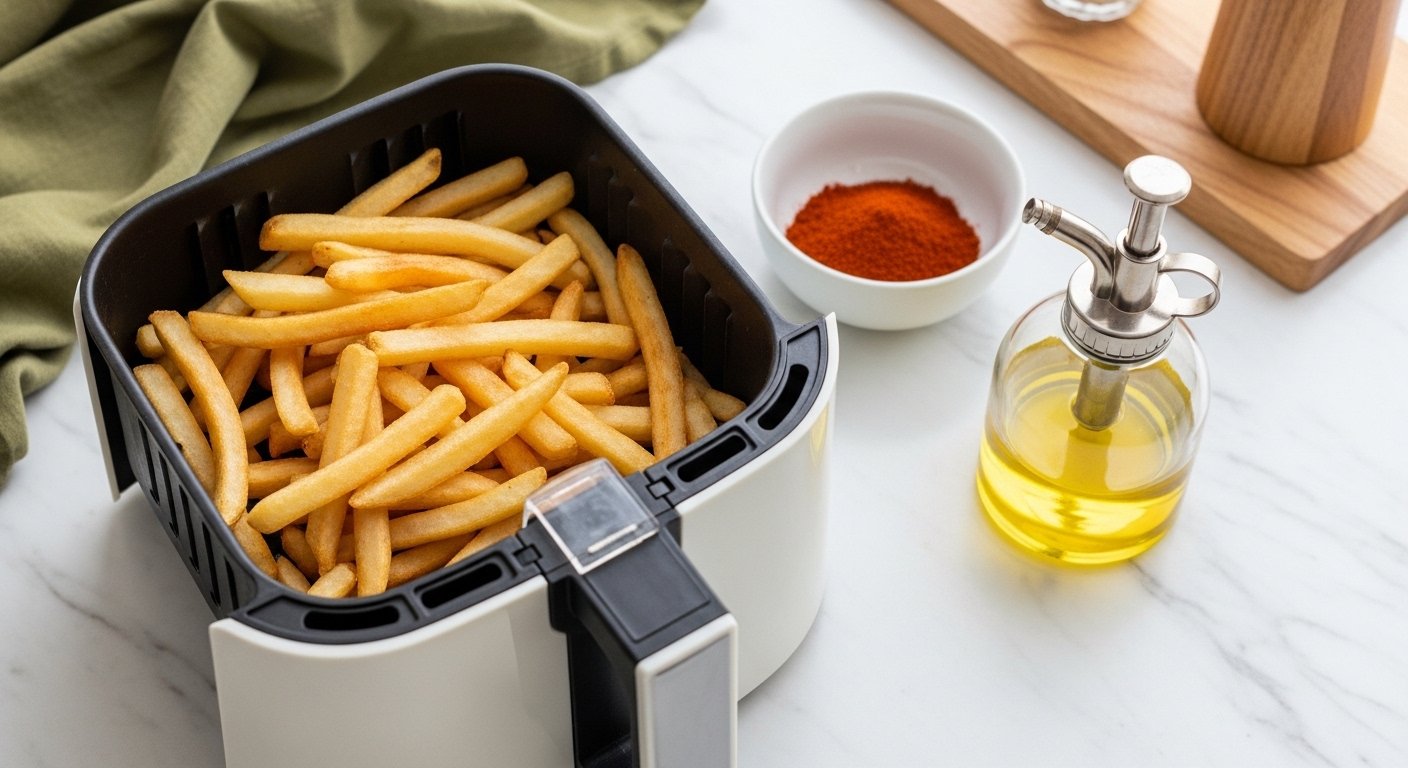
You want perfectly crispy golden edges from your air fryer every time, but the results keep coming out soggy or overcooked. That’s the most common pain point home cooks search for: how to use an air fryer for crispy easy meals without guesswork.
A few simple tweaks — the right coating, the right temps, and quick mid-cook moves — solve it. I rely on a digital kitchen scale for consistent portions and an instant-read thermometer to nail doneness. According to a 2024 Food Network survey, more than half of home cooks use an air fryer weekly, so these tips will get you ahead.
Read on to learn how to use an air fryer for crispy easy meals, step-by-step techniques, quick fixes for soggy food, and pantry recommendations that make every batch pin-worthy.
Preparing Your Ingredients for Crispy Results
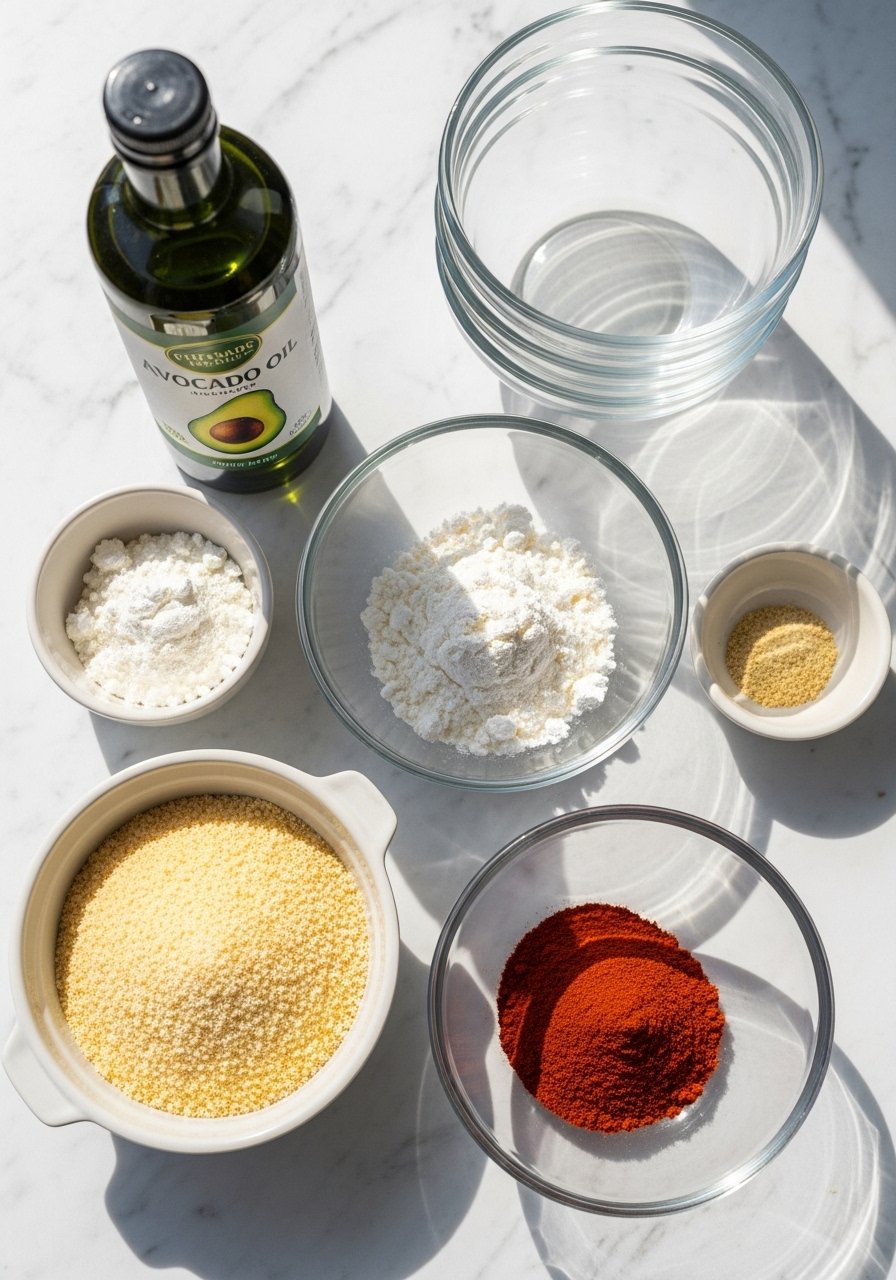
Prep is where crispiness begins. Dry proteins and vegetables thoroughly—moisture is enemy number one. For coated items, toss in a light slurry:
- For 1 lb chicken or tofu: mix 1 tbsp cornstarch, 1 egg, and 1/4 cup panko with 1 tsp smoked paprika and 1/2 tsp garlic powder.
- For fries: toss cut potatoes in 1 tsp avocado oil + 1/2 tsp salt.
Tools that help:
- Use a set of glass meal prep bowls to mix coatings quickly.
- Line the basket with perforated parchment paper to prevent sticking and make cleanup faster.
Pain point solved: If your food sticks or falls apart, dry it and use light coating rather than thick batter.
The Cooking Technique: Air, Space, and Heat
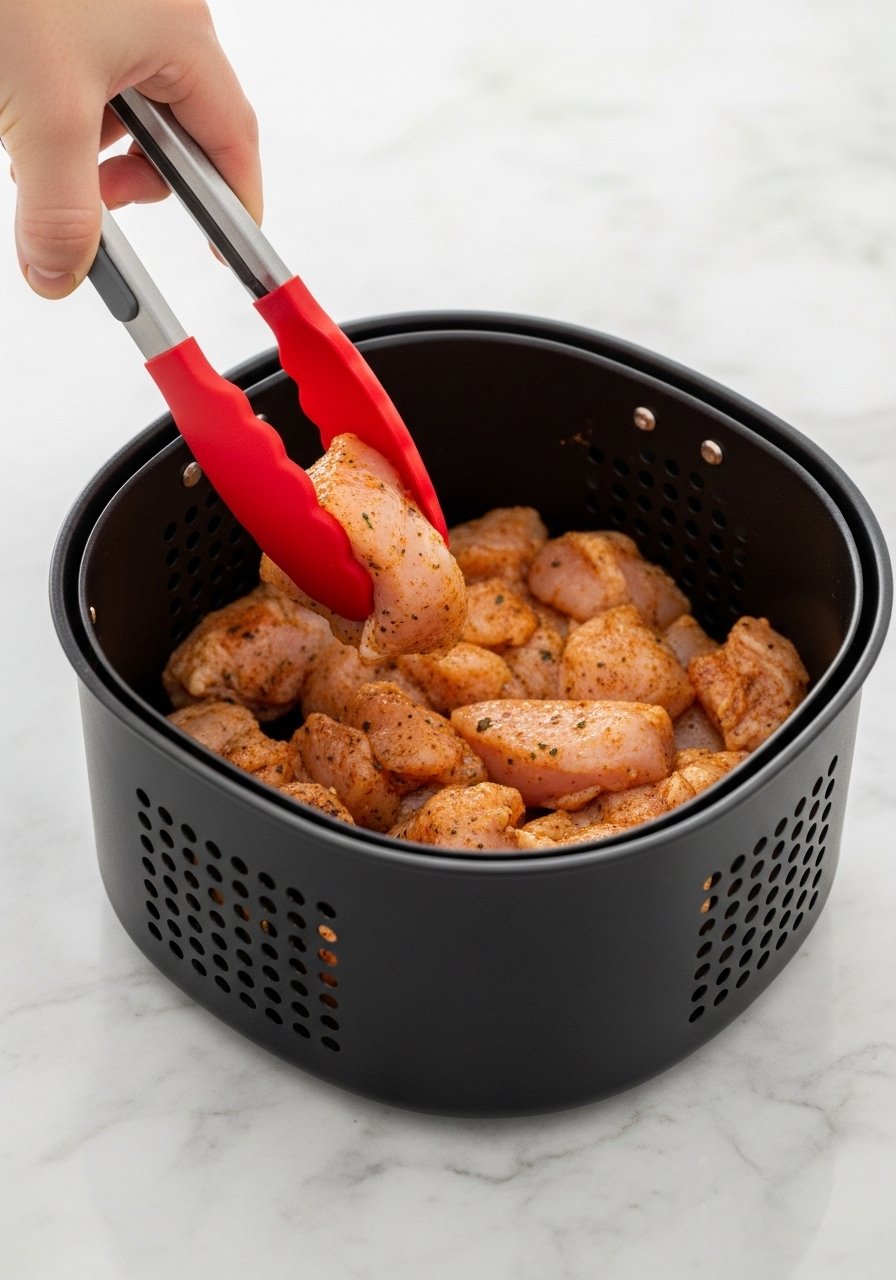
The air fryer works by circulating hot air—so give food space.
- Preheat the fryer to 400°F for fries or 375°F for breaded proteins.
- Arrange items in a single layer with gaps for airflow; do not overcrowd. Cook in batches for large dinners.
- Midway, shake or flip for even browning (about halfway through the cook time).
Timing examples:
- Fresh fries: 400°F for 15–20 minutes, shake at 8–10 minutes.
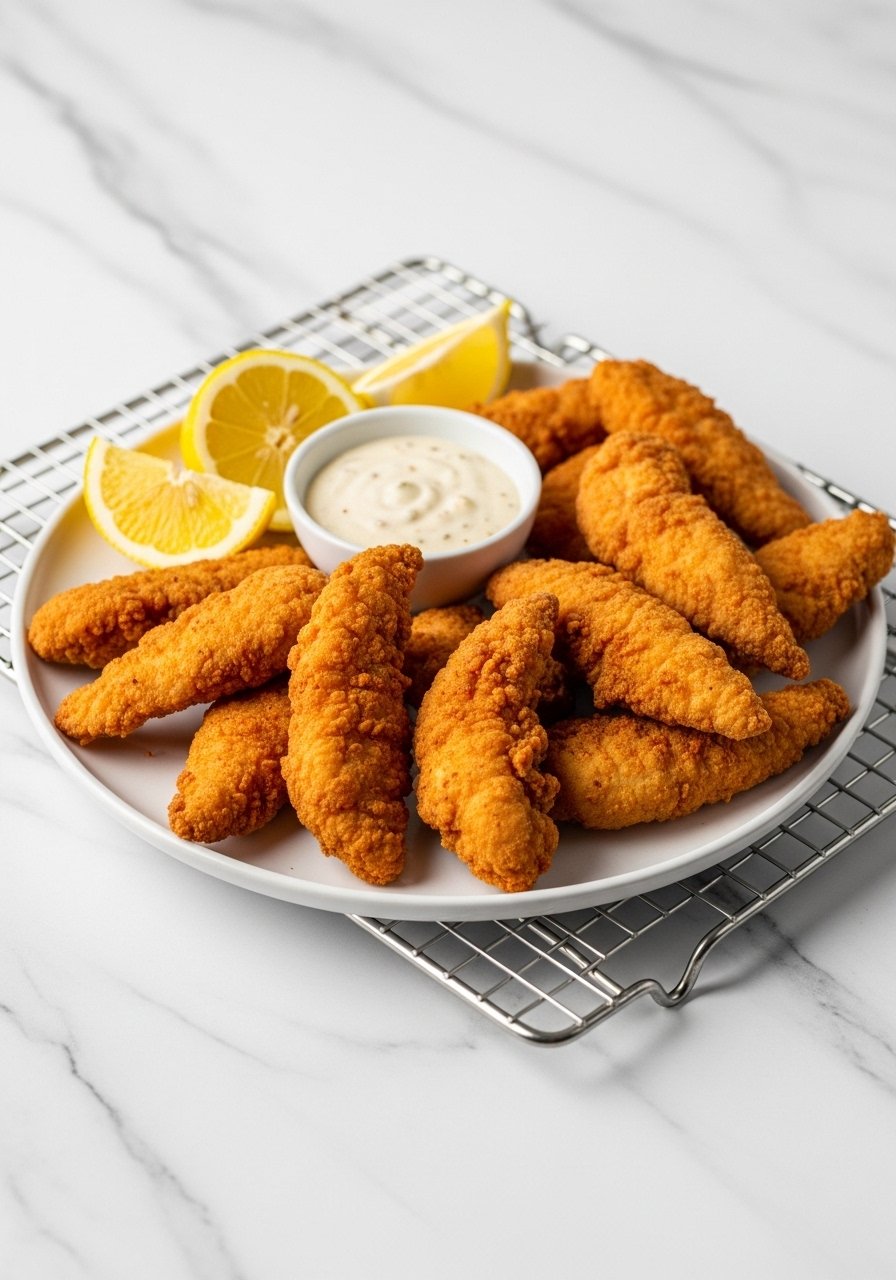
- Breaded chicken tenders: 375°F for 10–12 minutes, flip at 6 minutes.
Accessories that speed and scale:
- An air fryer accessory rack lets you layer for small items without stacking them directly.
- Use silicone tongs to flip without damaging coatings.
Pain point solved: Uneven cooking and small basket size—cook in batches and use an accessory rack.
Getting the Perfect Texture and Doneness
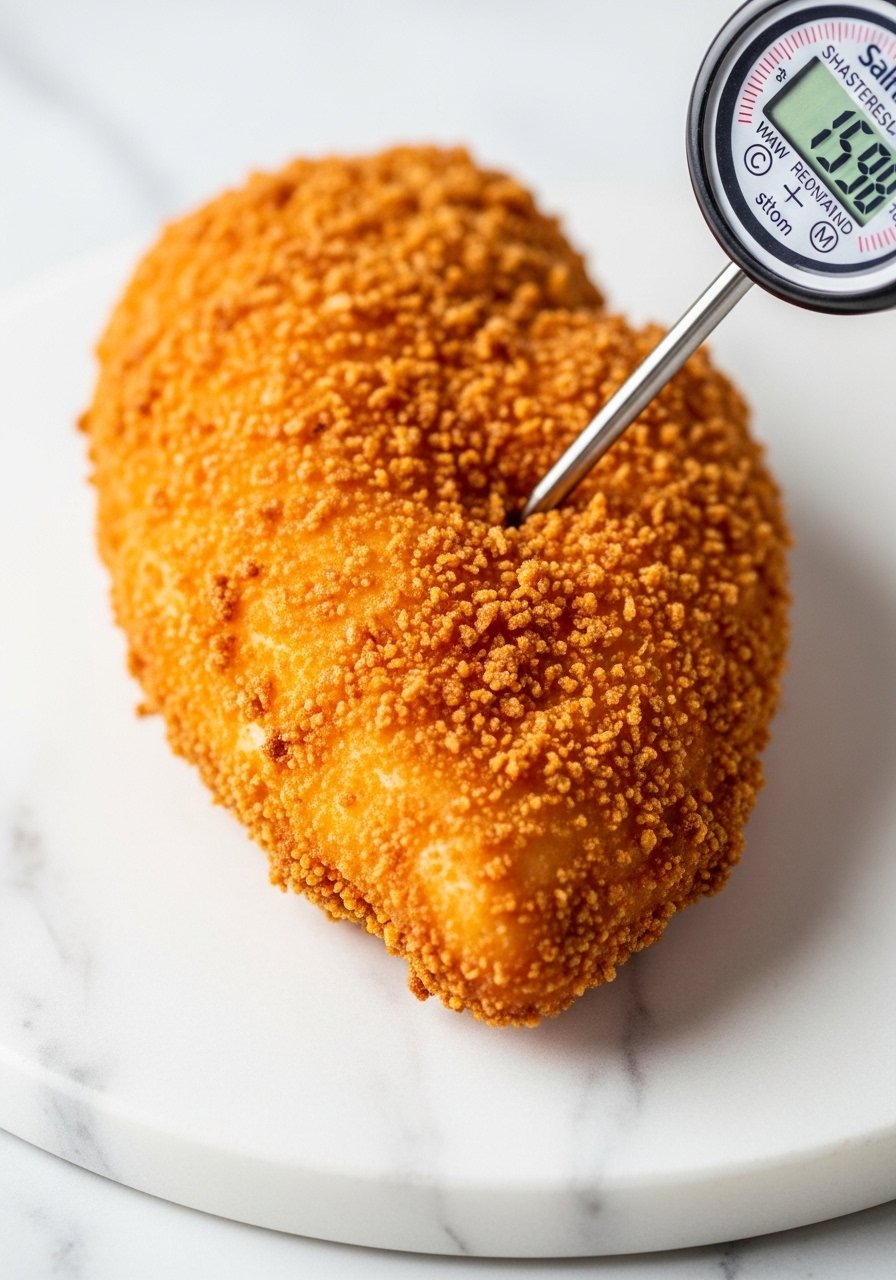
Crisp comes from dry heat and quick moisture evaporation. Try these pro principles:
- Use cornstarch in the coating for extra crisp (about 1 tbsp per pound of protein).
- Spray a fine mist of oil with an oil mister before cooking to promote browning.
- Target internal temps: 165°F for chicken, 145°F for pork, 165°F for reheated leftovers—check with an instant-read thermometer.
Visual cues:
- Look for crispy golden edges and bubbling coating.
- If breading looks pale at the end time, add 2–3 minutes at 400°F.
Substitutions and variations:
- Swap panko for almond flour for a low-carb crunch: same quantity.
- Use smoked paprika for depth of flavor, or gochujang for a sticky sweet heat.
Pain point solved: Dry or under-browned coatings—add cornstarch, spray oil, and finish at higher heat if needed.
Finishing Touches, Serving, and Storage
Finish smart so crisp stays crisp.
- Immediately transfer fried items to a wire cooling rack — resting on a plate traps steam and makes bottoms soggy.
- For leftovers: reheat at 350°F for 3–5 minutes to re-crisp.
- Store cooled leftovers in airtight containers. Reheat only what you’ll eat to avoid repeated drying.
Serving and presentation tips:
- Sprinkle flaky sea salt and a squeeze of lemon for brightness.
- Use small ramekins for dips—presentation makes recipes pin-worthy.
Pain point solved: Soggy bottoms after resting—use a wire cooling rack and re-crisp in the fryer.
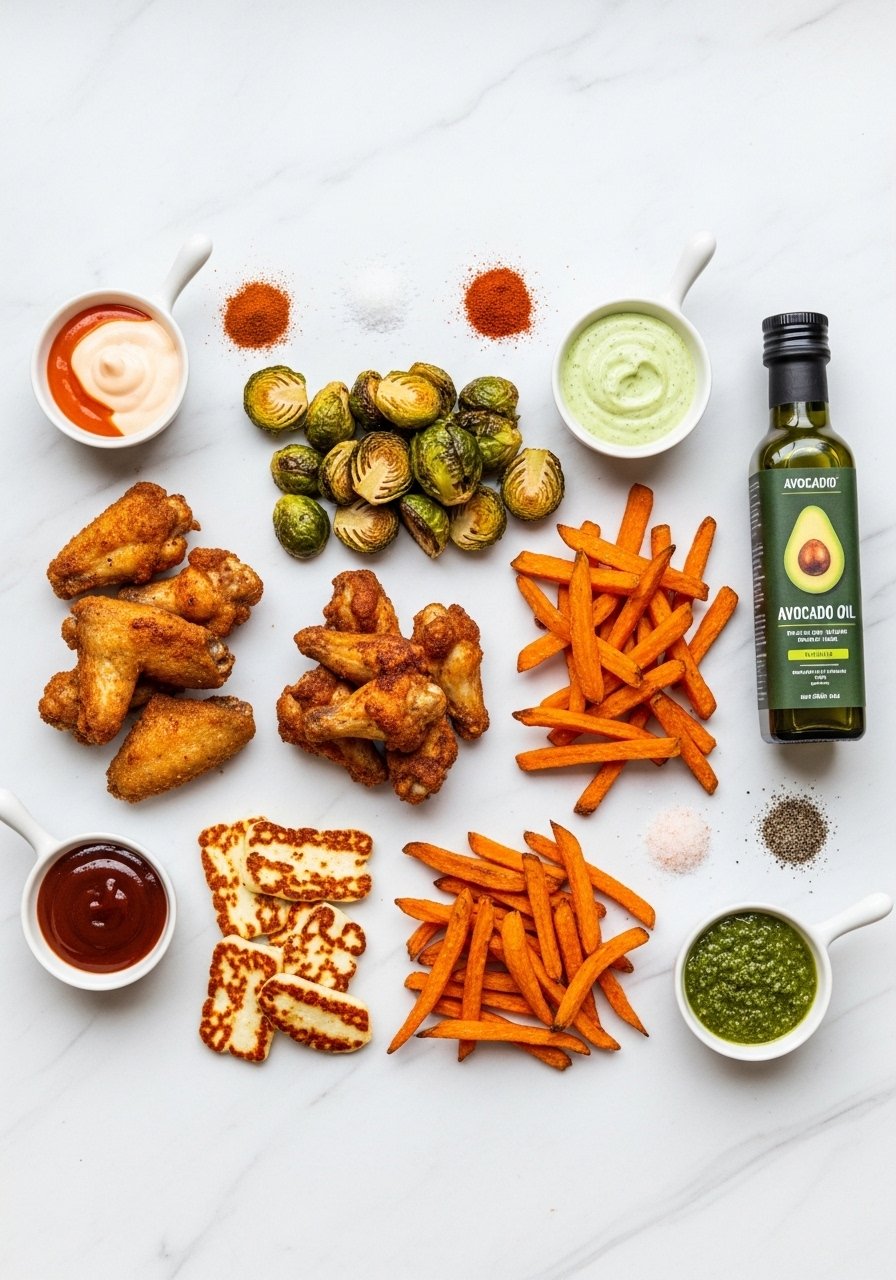
You’ve got the method: dry, space, correct temps, and a quick finish. Try the cornstarch-panko combo next time and watch those crispy golden edges appear.
Save this guide and pin it for your next weeknight meal. Which tip will you try first — the cornstarch coating or the wire-rack rest? If you want one tool to keep on hand, grab an instant-read thermometer and you’ll hit perfect doneness every time.
Related posts:
 7 Lazy Crockpot Meals That Cook While You Relax
 11 Brilliant One-Pot Meals With Almost No Cleanup
 10 Lightning-Fast Dinner Recipes Ready in 30 Minutes
 How to Cook Ground Beef Without Drying It Out
 10 Juicy Shrimp Recipes Ready in Minutes
 6 Powerful Instant Pot Recipes That Save Hours
 11 Shockingly Easy Recipes Anyone Can Master
 13 Beginner-Friendly Recipes With Guaranteed Success