
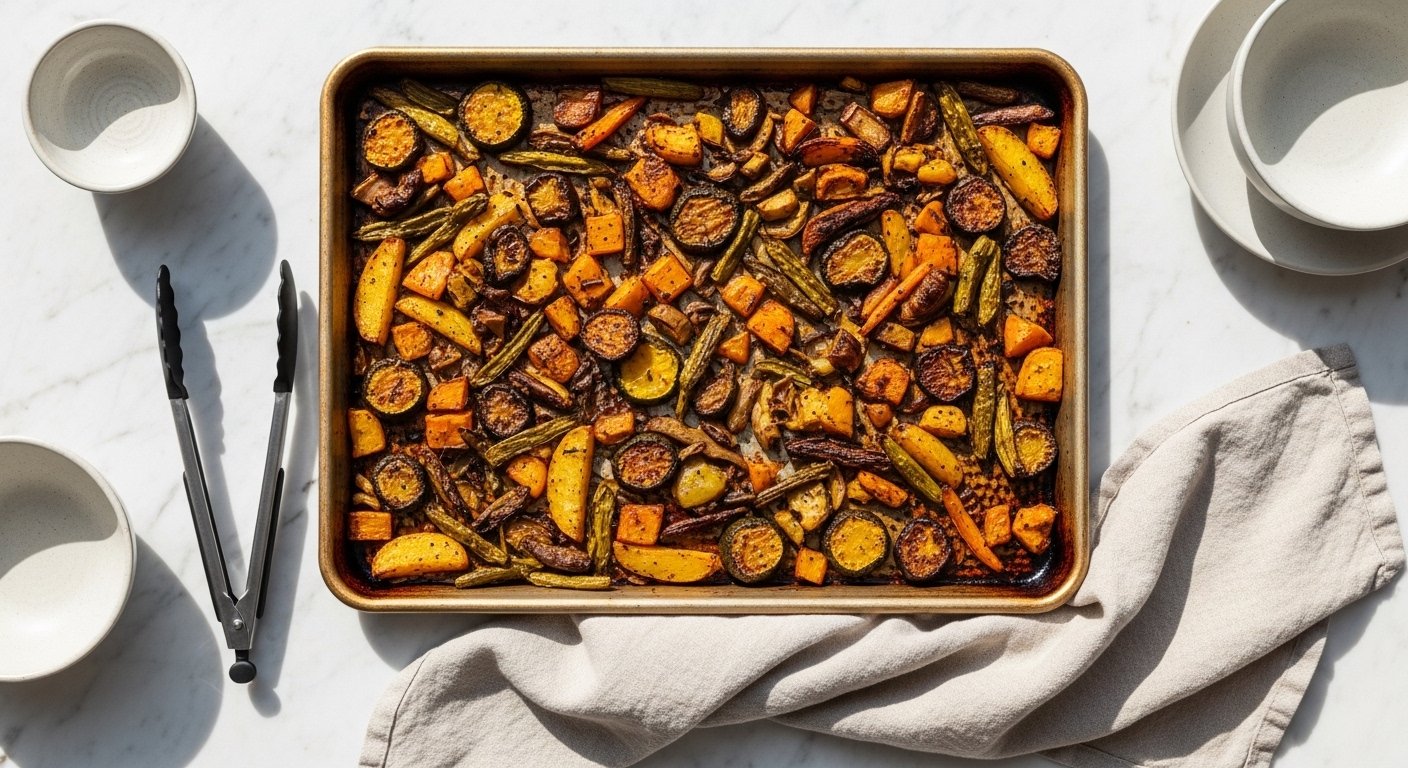
You’ve tried roasting vegetables but ended up with soggy centers or burnt edges. The trick is simple: high heat, single-layer spacing, and the right prep. This guide shows you how to roast vegetables for crispy edges and soft centers using a reliable roasted vegetables recipe anyone can follow.
The secret tools that make it repeatable are a sturdy rimmed baking sheet and a roll of parchment paper so veggies lift off cleanly. Read on for exact temps, timing, seasoning combos, and fixes to common problems.
What you’ll learn: how to prep, the best roasting method, seasoning options for flavor, plus storage and reheating tips so your crispy roasted vegetables stay great all week.
Preparing Your Ingredients
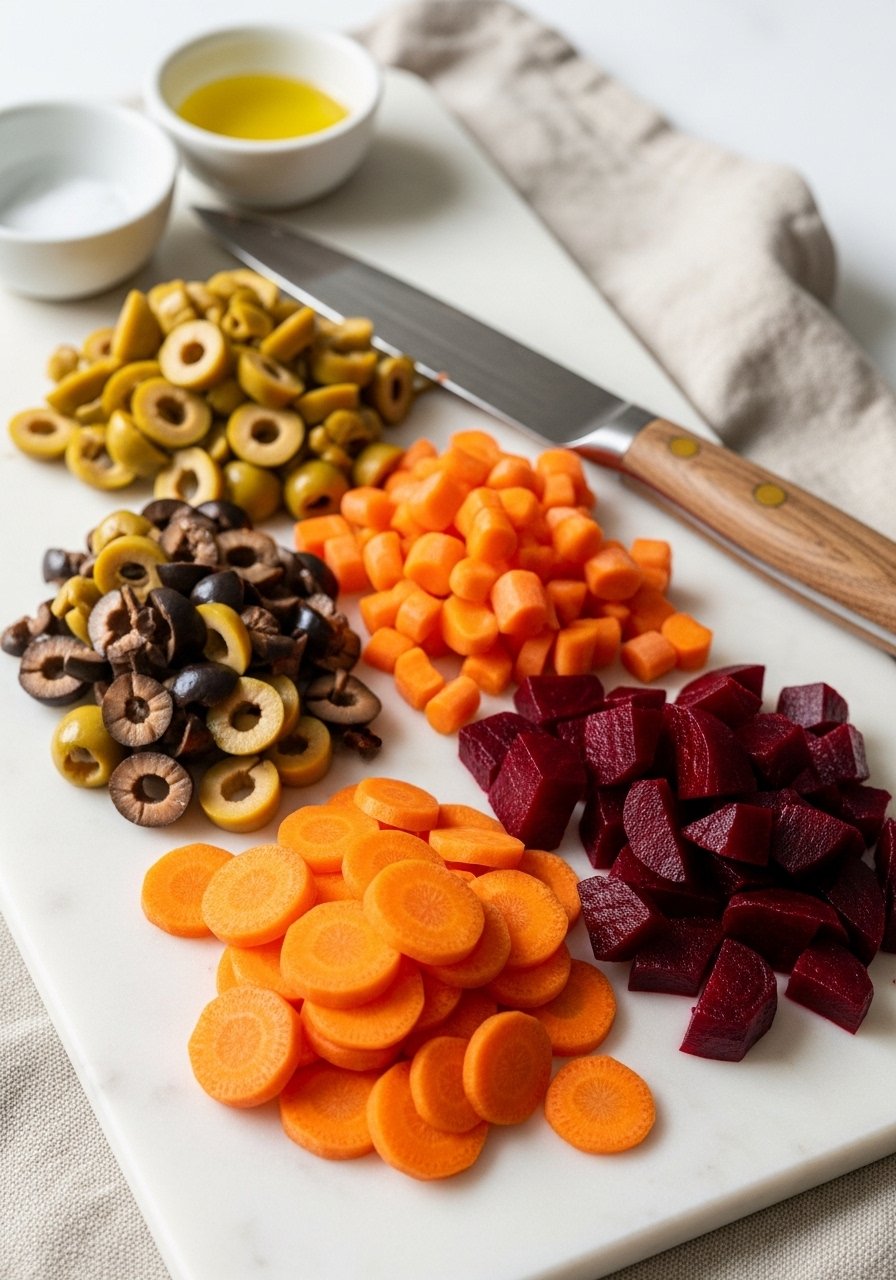
- Cut vegetables into uniform pieces so they cook evenly—aim for 1–1.5-inch chunks for roots, and halved Brussels sprouts or thicker slices for squash.
- Use a sharp chef knife and a clean cutting board to make prep fast and safe.
- Toss vegetables with about 1 Tbsp olive oil per 2 cups of veg, salt, and pepper. This ratio prevents soggy results while ensuring browning.
Prep tips:
- Group fast-cooking veg (zucchini, bell peppers) separately from dense roots (carrots, beets).
- Pat wet vegetables dry—moisture = steaming, not roasting.
- Line a rimmed baking sheet with parchment paper for easy cleanup and crisp bottoms.
High-Heat Roasting Method
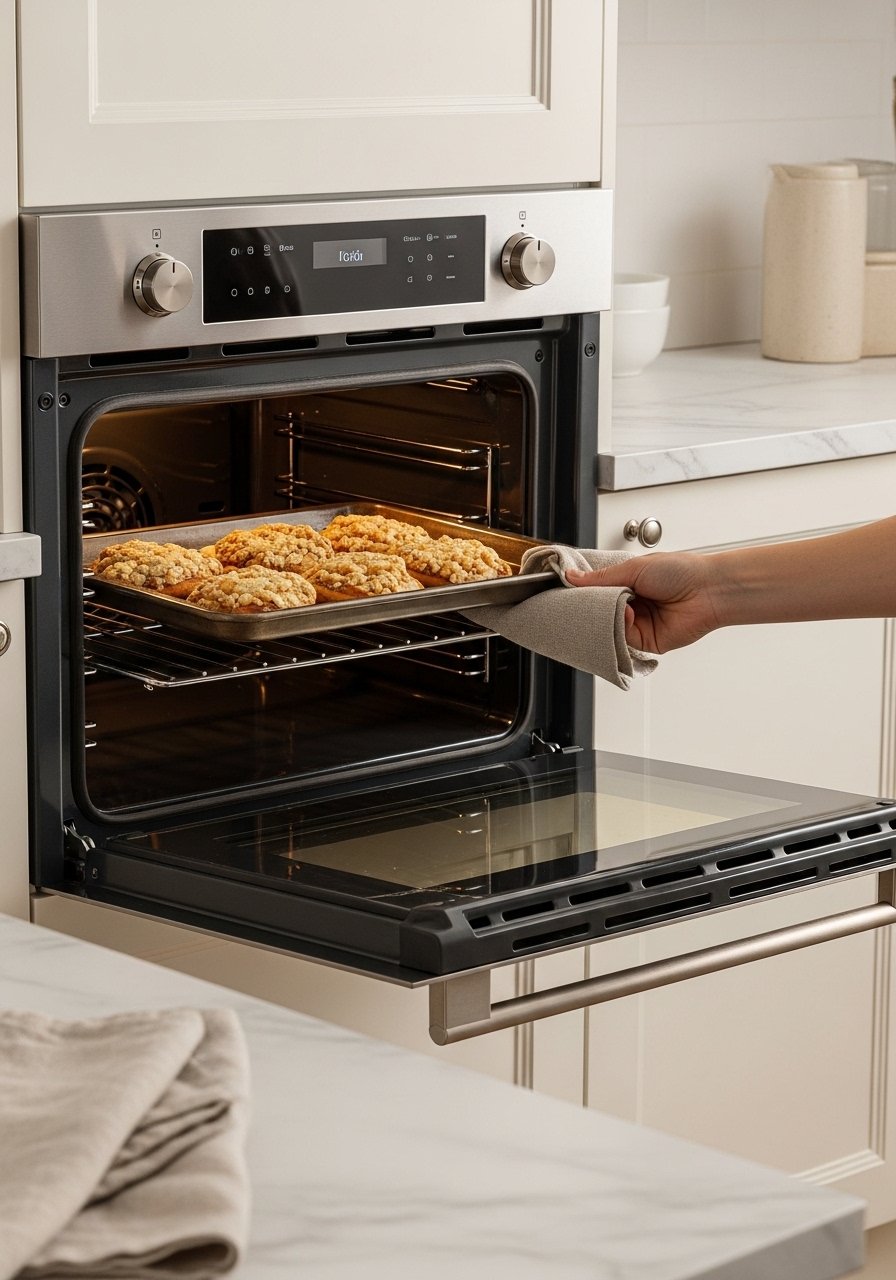
- Preheat oven to 425–450°F—this range gives you crispy roasted vegetables without overcooking the interior.
- Use one single layer on the pan with space between pieces so air circulates. Crowding causes steaming.
- Roast on the middle rack for 20–40 minutes depending on veg:
- Quick: 15–20 minutes (summer squash, mushrooms)
- Medium: 20–30 minutes (broccoli, Brussels sprouts, cauliflower)
- Long: 30–40 minutes (carrots, beets, winter squash)
Technique:
- Roast at full temp, then rotate the pan once halfway through. No constant stirring needed.
- If your oven runs hot or cool, check with an oven thermometer so you hit the right temp.
- Transfer finished pieces to a wire cooling rack briefly to keep bottoms crisp.
For precise doneness, probe the thickest piece with a fork—it should be tender but not falling apart.
Seasoning, Flavor Variations & Finishes
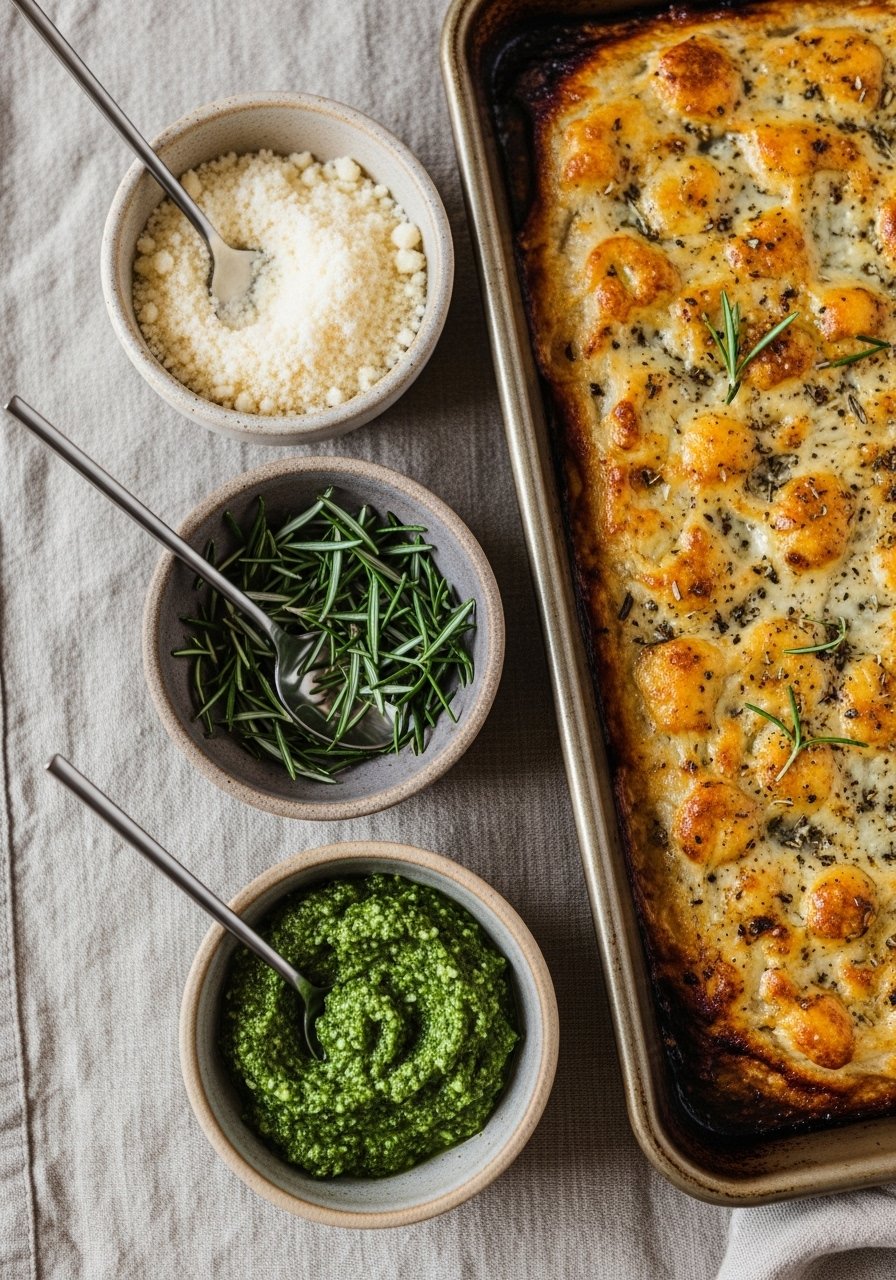
Start simple: olive oil, salt, and pepper. Then try one of these quick finishes to upgrade a basic roasted vegetables recipe:
- Mediterranean: toss with 1 tsp Italian seasoning and minced garlic before roasting; finish with lemon zest.
- Parmesan & Herb: sprinkle grated Parmesan and chopped fresh rosemary right after roasting.
- Pesto finish: stir roasted vegetables with 1–2 Tbsp pesto for an instant flavor boost.
Tools that help:
- Use a silicone pastry brush to oil crevices on halved veg.
- Use kitchen tongs or a silicone spatula to move pieces without breaking them.
Pro tip: add delicate greens (spinach, herbs) after roasting so they stay bright.
Troubleshooting, Storage & Reheating
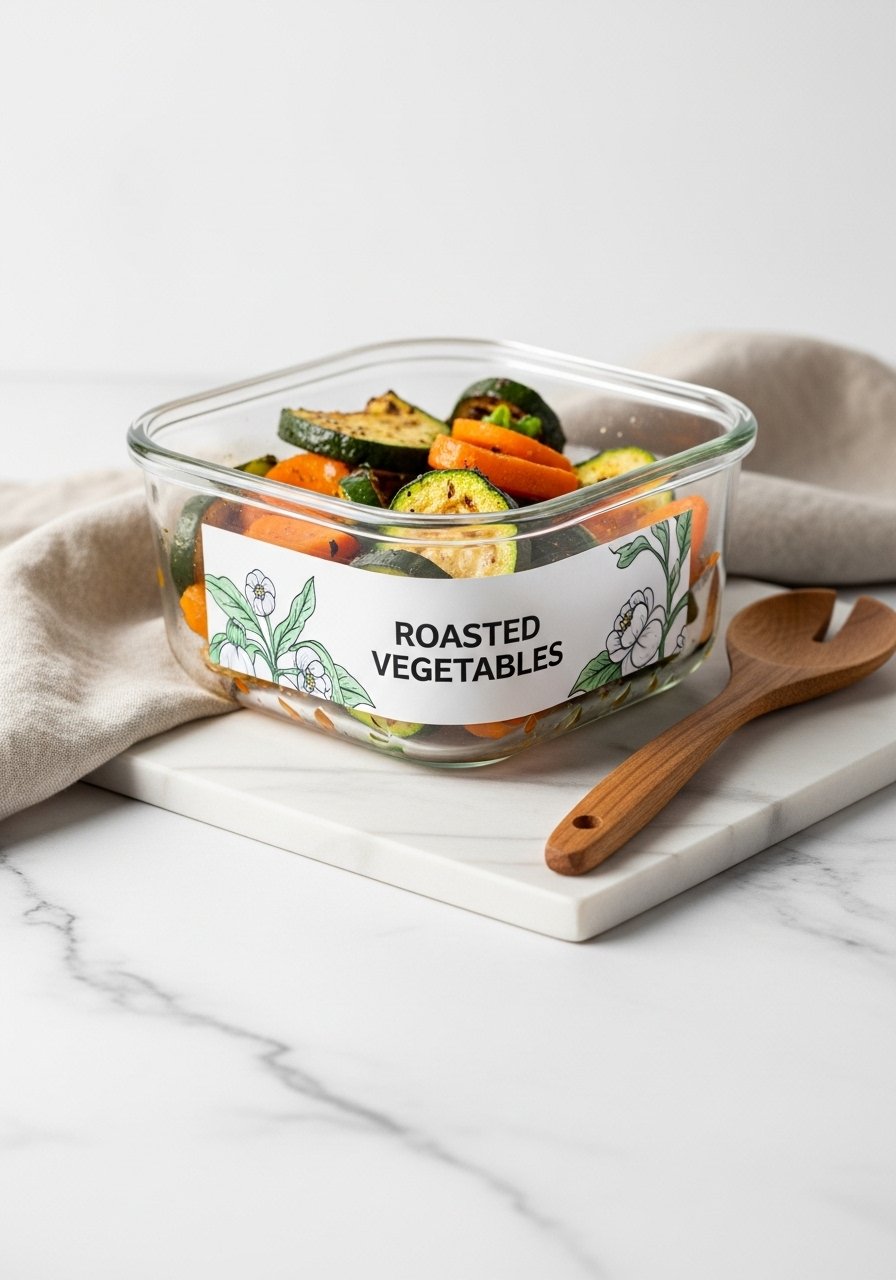
Why they steamed, not crisped?
- Too crowded, too low temp, or overly wet pieces. Fix by spreading on a second pan, increasing to 425–450°F, or patting dry before oiling.
Storing:
- Cool vegetables completely, then store in airtight glass storage containers. They keep 3–4 days in the fridge.
Reheating:
- Reheat on a sheet pan at 400°F for 5–10 minutes to restore crisp edges. Avoid the microwave if you want texture.
Which tip helps most? Try the single-layer rule and the temp range first—you’ll notice the difference immediately.
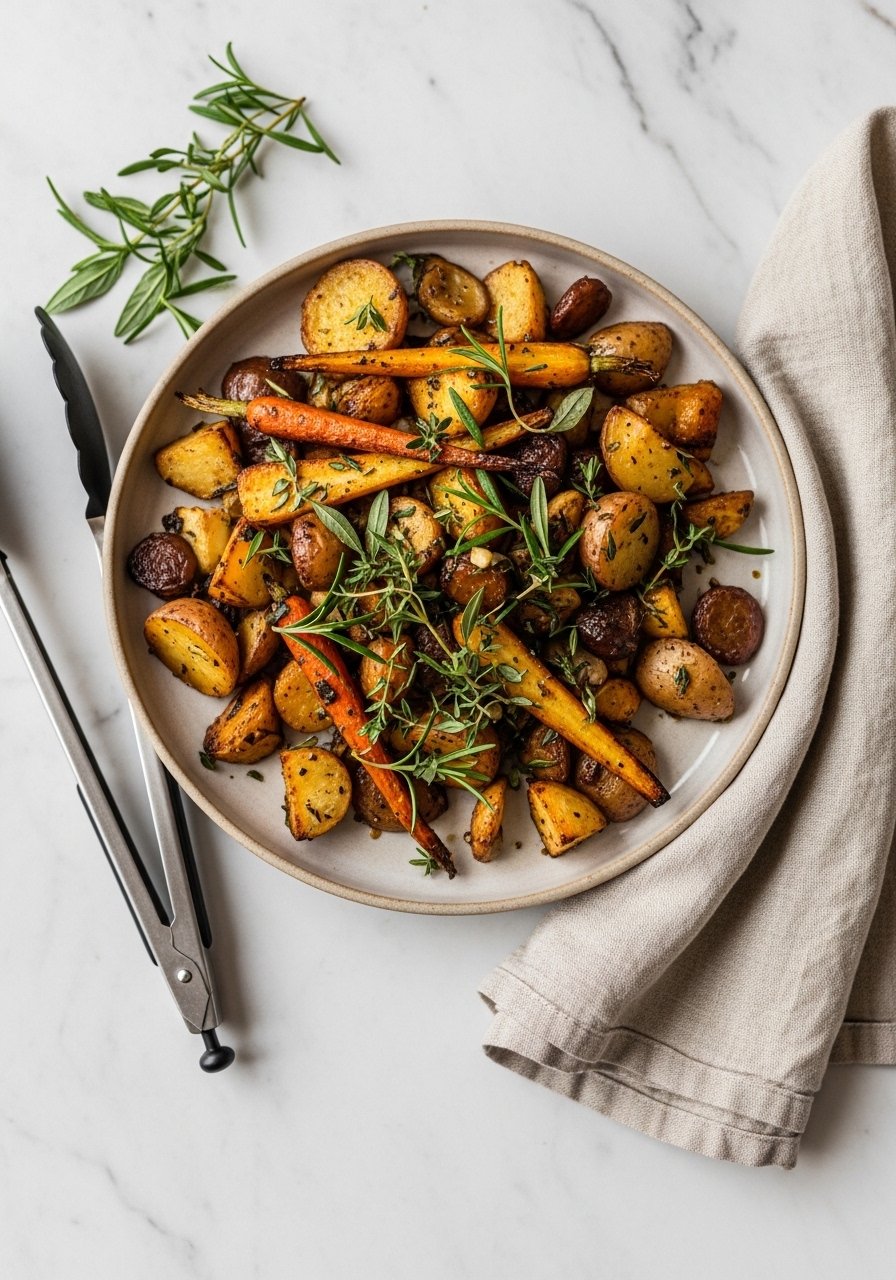
Bake with confidence—get your oven temp right, spread the vegetables out, and use simple seasoning. Grab a reliable rimmed baking sheet if you roast often; it really helps. Pin this roasted vegetables recipe for quick weeknight sides and share it with friends who need crispier results. Which vegetable will you roast first?