
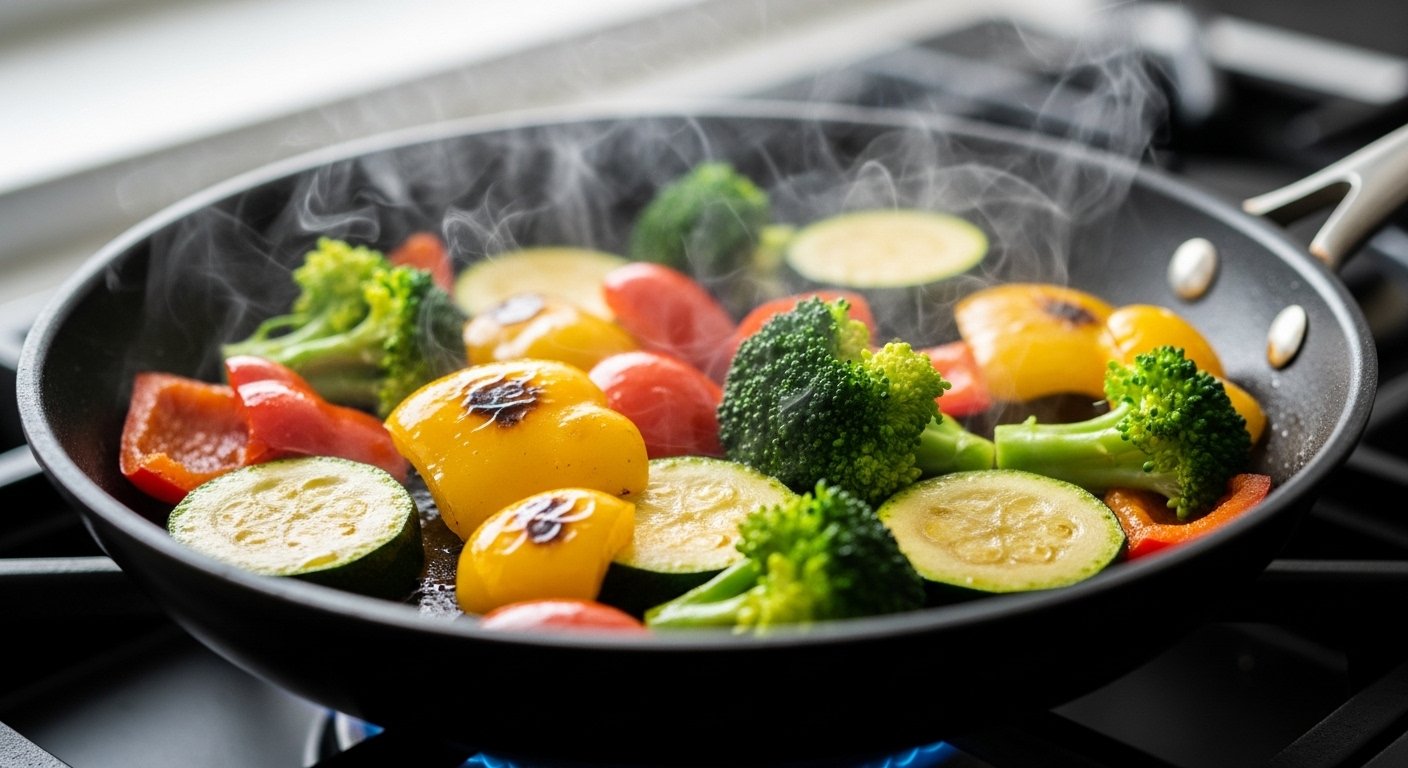
If your vegetables keep turning soft, watery, or dull no matter what you do, you’re not alone. Sautéing seems simple, but getting crisp edges, bright colors, and deep flavor takes a few small—but game-changing—techniques. Once you understand how heat, moisture, and timing work together, you’ll never settle for soggy veggies again.
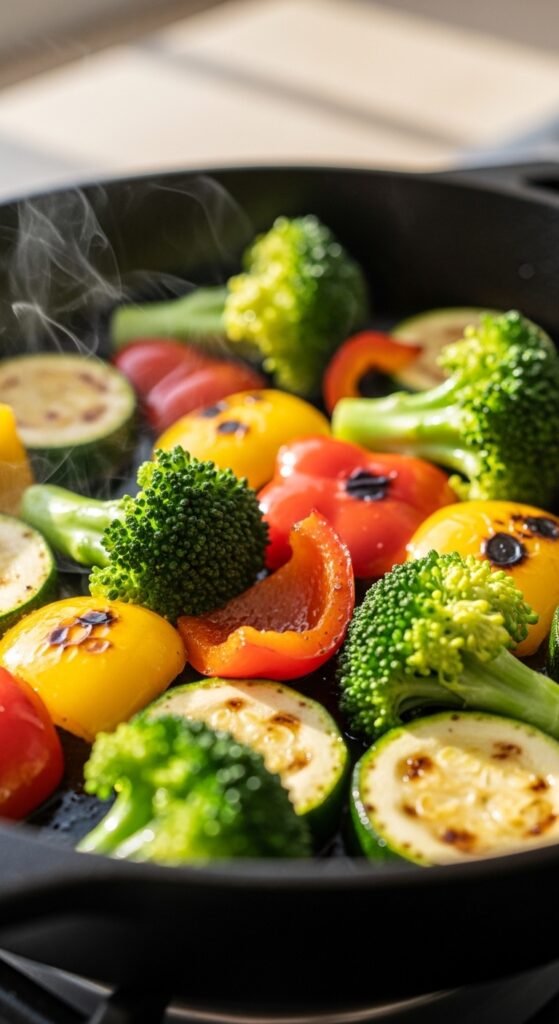
Let’s break it down step by step.
Choose the Right Vegetables (and Cut Them Properly)
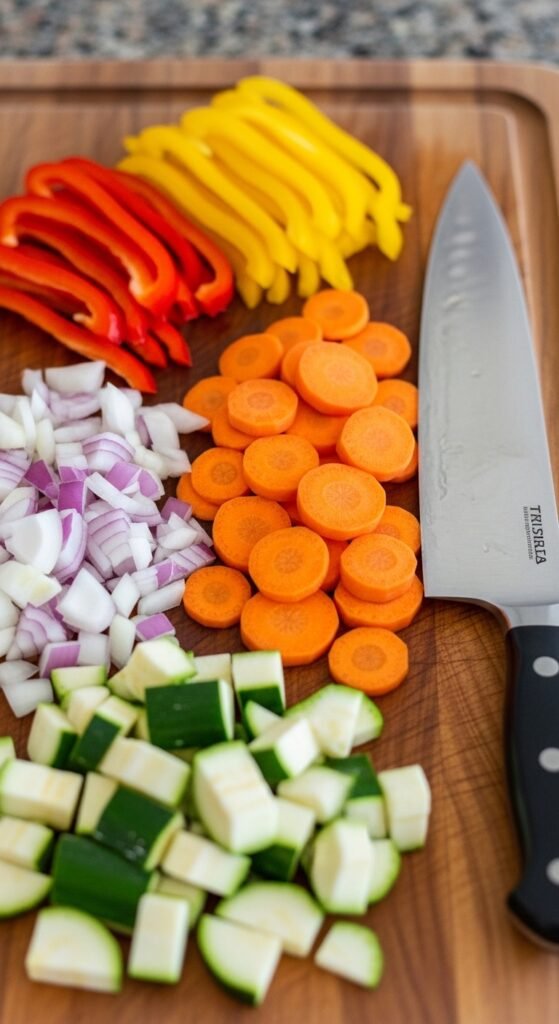
The biggest reason vegetables turn mushy is uneven or incorrect cutting. Different veggies have different water content and cooking times.
To get a perfect sauté:
- Cut vegetables into even pieces.
- Separate firm vegetables (carrots, broccoli, onions) from quick-cooking ones (zucchini, peppers, spinach).
- Avoid overly thick slices—they steam before they brown.
A good rule of thumb:
The denser the vegetable, the smaller the cut. The softer the vegetable, the larger the cut.
Use High Heat—Your Best Friend for Flavor
Sautéing literally means “to jump,” so your vegetables should sizzle the second they hit the pan. High heat does three important things:
- Drives off moisture quickly (preventing sogginess).
- Creates caramelization, giving you those delicious golden edges.
- Keeps veggies crisp-tender, not limp.
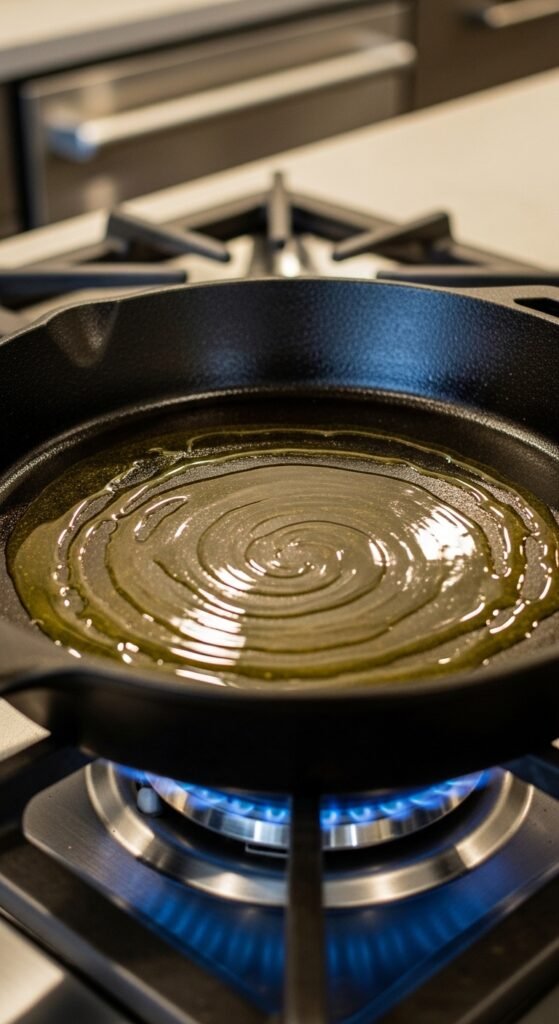
Always preheat your pan for 1–2 minutes before adding oil. Then add the vegetables immediately after the oil shimmers.
If you put vegetables into a cold pan or cold oil, they begin to steam instead of brown—and that’s where the sogginess starts.
Choose the Right Pan and Oil
A nonstick skillet works, but a stainless steel or cast-iron pan gives you the best browning. They retain heat better and help create caramelized flavor.
As for oil, choose one with a higher smoke point:
- Avocado oil
- Grapeseed oil
- Canola oil
- Light olive oil
Avoid butter at the start—it burns too quickly. Add butter at the end for flavor.
Cook in the Right Order (This Alone Fixes Everything)
Not all vegetables cook at the same speed. If you throw them all in the pan at once, some will overcook while others stay hard.
Follow this order:
Longest-cooking first
- Carrots
- Broccoli
- Cauliflower
- Onions
Sauté these until they begin to soften slightly.
Medium-cooking next
- Peppers
- Zucchini
- Mushrooms
Add these after the first batch starts browning.
Quick-cooking last
- Spinach
- Kale
- Cherry tomatoes
- Herbs
These only need 1–2 minutes.
This simple adjustment ensures everything finishes perfectly at the same time.
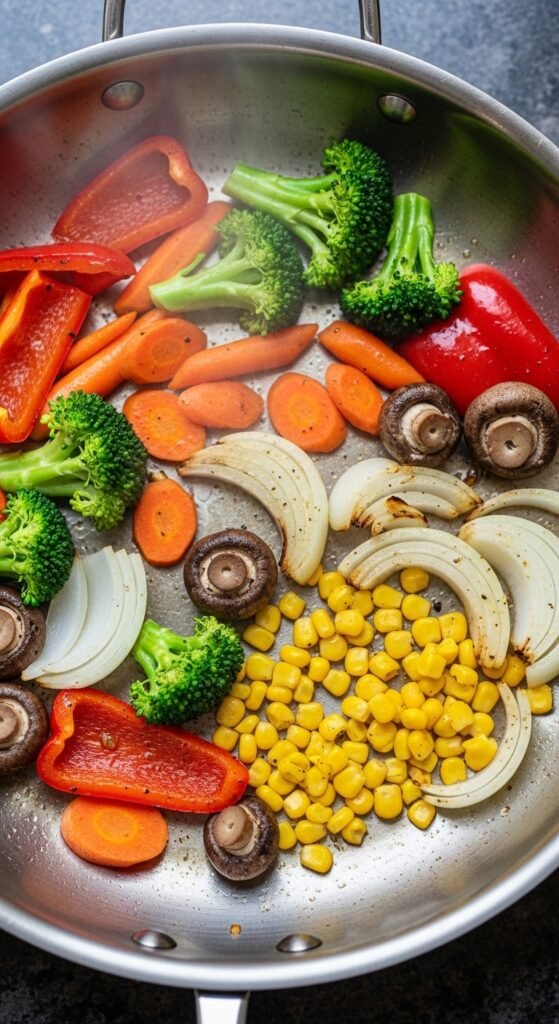
Don’t Crowd the Pan (Seriously—Just Don’t)
Overcrowding is the #1 cause of soggy vegetables.
When the pan is too full:
- Steam gets trapped
- Water accumulates
- Browning becomes impossible
Veggies should be in a single, even layer with space between them.
If you’re cooking a lot, work in batches—it’s worth it.
Season at the Right Time
Salt pulls out moisture, so when you add it matters.
- Add a pinch of salt halfway through cooking, after the pan is already hot and the vegetables are starting to brown.
- Too early = more moisture = steaming
- Too late = seasoning doesn’t fully penetrate
Keep it simple:
Salt, pepper, garlic, and a splash of soy sauce or lemon juice can completely transform the dish.
Finish With Flavor Boosters
This is where your sautéed vegetables go from “good” to “restaurant-level amazing.”
Try adding these in the final 30–60 seconds:
- A pat of butter
- A squeeze of lemon
- Fresh herbs (parsley, cilantro, basil)
- A splash of balsamic vinegar
- Red pepper flakes
- Minced garlic (added at the end to avoid burning)
These ingredients brighten the dish and add complexity without overpowering the veggies themselves.
How to Know When Your Vegetables Are Done
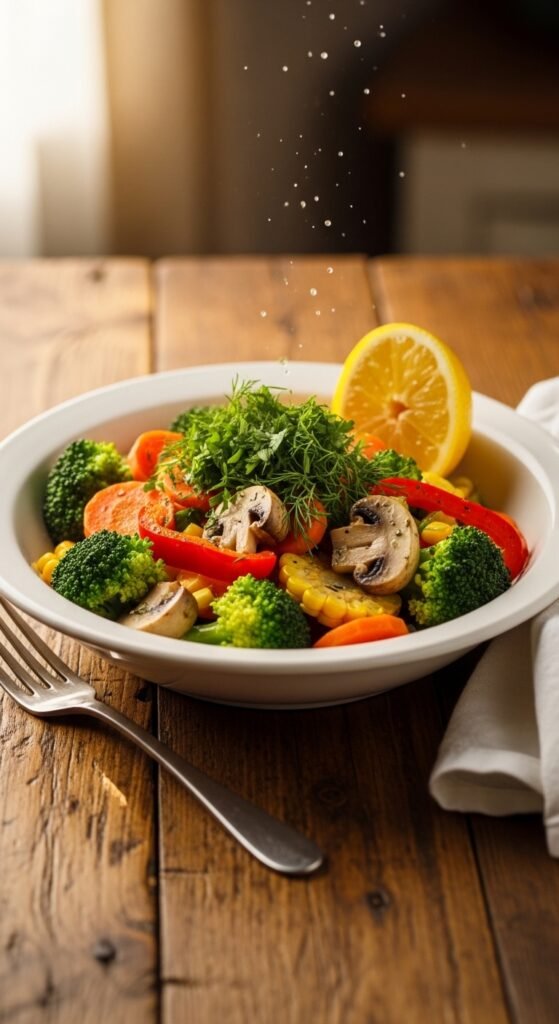
Perfect sautéed vegetables should be:
- Bright in color
- Lightly charred on the edges
- Tender but still crisp
- Flavorful without being greasy
Most vegetables only need 5–8 minutes total, depending on size and type.
A good test:
If they bend but don’t flop, they’re ready.
Final Tips for Guaranteed Success
- Pat vegetables dry before cooking—moisture is the enemy.
- Don’t stir constantly; let them sit to build color.
- Add aromatics (garlic, ginger) near the end so they don’t burn.
- Taste as you go—adjust seasoning gradually.
Master these techniques and your sautéed vegetables will always turn out vibrant, flavorful, and perfectly textured.
Takeaway
Sautéing vegetables isn’t about fancy tricks—it’s about heat, timing, and letting each ingredient shine. Follow these steps, and you’ll have crisp, flavorful veggies every single time.
Save this recipe for later!
Related posts:
 How to Cook Rice Perfectly Every Single Time
 How to Season Food Properly for Maximum Flavor
 How to Cook Chicken So It Stays Juicy and Tender
 22 Irresistible Pasta Recipes Everyone Asks You For
 29 Lazy Crockpot Meals That Cook While You Relax
 26 Easy Dinner Recipes That Save Busy Weeknights
 21 Morning-Winning Breakfast Recipes That Feel Special
 How to Cook for Beginners Without Feeling Overwhelmed